Choosing the best Travel Mug for global buyers is not simply a matter of color, price, or brand recognition. A commuter in London may need leak protection for crowded trains, while a buyer in Singapore may prioritize heat control in humid weather. Different routines expose different weaknesses.
Industry data supports this growing demand. Grand View Research’s 2024 analysis of the reusable water bottle market identifies sustainability, portability, and product durability as major purchasing influences. Fortune Business Insights also reports continued expansion across reusable drinkware, driven by convenience and reduced reliance on single-use products. These findings matter, but they do not make every reusable cup equally responsible.
Real-world testing is essential. A reliable Travel Mug should keep coffee warm, remain comfortable to hold, and fit common vehicle cup holders. Its lid should resist spills when placed beside a laptop or carried inside a work bag. Materials also deserve scrutiny. Stainless steel offers strength and odor resistance, while plastic models may reduce weight and cost. However, “eco-friendly” claims can be vague.
The U.S. Environmental Protection Agency emphasizes waste prevention and reuse, yet environmental benefits depend on repeated use and proper cleaning. That point is easy to overlook. A poorly designed mug may be abandoned after a few leaks.
Global buyers should also examine capacity, insulation performance, replacement parts, cleaning access, and regional warranty support. No single model wins everywhere. The best choice depends on climate, transport habits, beverage preferences, and maintenance expectations. This guide compares those practical details with published market evidence, while acknowledging one uncomfortable truth: product specifications do not always match daily experience.
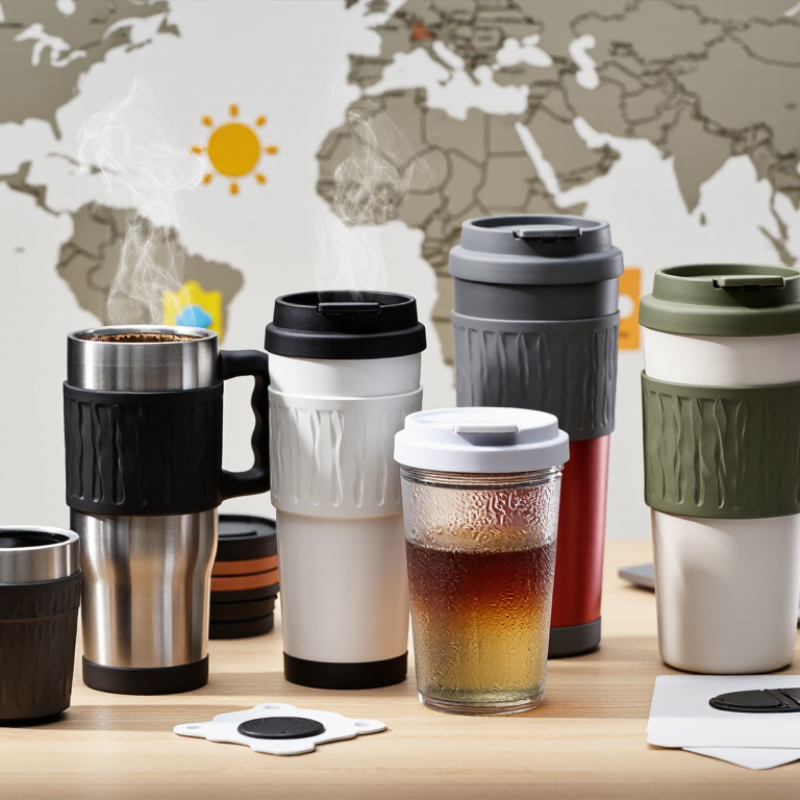
What Is the Best Travel Mug for Global Buyers?
Defining the Needs of Global Travel Mug Buyers
The best travel mug is not identical for every country or commute. Global buyers often need leak resistance, thermal stability, easy cleaning, and dependable everyday handling. A practical test involves filling the mug, inverting it for ten minutes, and checking the lid afterward. Small failures matter. A damp laptop bag can ruin a workday.
Grand View Research estimated the global reusable water bottle market at USD 9.67 billion in 2023. Its forecast indicates continued expansion through the decade. IMARC’s 2024 market outlook also identifies convenience, sustainability, and portability as major demand drivers. These figures include adjacent drinkware categories, so travel mug estimates can vary. That limitation deserves attention.
Material safety remains essential for international purchasing. Buyers should request food-contact documentation for the target sales region, including relevant United States or European requirements. Stainless steel may suit frequent commuters, while lighter materials can reduce shipping weight. However, “eco-friendly” claims are sometimes vague. Ask about recycled content, coating durability, and end-of-life handling. I also prefer wide openings, replaceable seals, and clear care instructions. Yet I still overvalue appearance occasionally. A beautiful mug with a fragile hinge is a poor global product. Testing should include hot and cold drinks, one-handed opening, cup-holder fit, dishwasher guidance, and use in humid or freezing conditions. Condensation reveals more than advertising copy.
| Buyer Need | Recommended Specification | Practical Benchmark | Why It Matters for Global Travel | Priority |
|---|---|---|---|---|
| Temperature retention | Double-wall vacuum insulation | Hot drinks remain useful for approximately 4–8 hours; cold drinks remain chilled for approximately 8–24 hours, depending on design and use. | Travelers may spend long periods in airports, vehicles, trains, or outdoor locations without access to a preferred beverage temperature. | Very High |
| Leak prevention | Secure, replaceable, food-grade sealing system | A closed mug should resist leakage when carried upright and during normal movement; a locking lid provides additional protection. | Leakage can damage passports, electronics, clothing, and other items in carry-on luggage. | Very High |
| Capacity | Compact size with sufficient beverage volume | Approximately 350–500 ml is suitable for many commuting and airline-travel routines. | A smaller mug is easier to pack, while a medium capacity reduces the need for frequent refills. | High |
| Portability | Slim, lightweight, cup-holder-compatible body | A body diameter of roughly 65–75 mm commonly fits many vehicle cup holders, but fit should be checked before purchase. | Global buyers use different cars, luggage systems, backpacks, and public-transport layouts. | High |
| Material safety | Food-contact-compliant stainless steel and plastic components | The product should be made from materials compliant with the destination market's food-contact regulations and free from intentionally added BPA where applicable. | Regulatory requirements differ by market, so documentation and clear material information support buyer confidence. | Very High |
| Ease of cleaning | Wide opening and removable lid components | A wide opening should allow access for a bottle brush, and removable seals should be washable and replaceable. | Frequent use across countries increases the need for quick cleaning and odor control. | High |
| Airport and security convenience | Easy-open, empty-friendly design | The mug should be simple to empty, inspect, and refill after security screening; travelers should follow the rules of each airport. | Liquid restrictions and screening procedures vary by airport and country. | High |
| Durability | Impact-resistant exterior and corrosion-resistant interior | Stainless steel construction generally offers better resistance to corrosion and daily wear than thin single-use containers. | A durable mug reduces replacement needs during frequent travel and lowers long-term ownership costs. | High |
| Grip and handling | Textured or non-slip surface with balanced weight distribution | The exterior should remain comfortable to hold and stable on common flat surfaces without excessive bulk. | Reliable handling is useful in moving vehicles, crowded stations, and unfamiliar environments. | Medium |
| Sustainability | Reusable construction, replaceable seals, and recyclable materials where facilities exist | Long service life and replaceable wear parts are more meaningful than packaging claims alone. | Waste-management systems differ widely, so durability and reuse provide practical environmental value across markets. | Medium |
| Instructions and support | Clear multilingual care, safety, and warranty information | Instructions should cover cleaning, temperature use, leak prevention, dishwasher suitability, and replacement-part availability. | Different languages, climates, water conditions, and service expectations make clear documentation important for international buyers. | Medium |
Note: Performance varies by construction, beverage temperature, ambient conditions, lid design, and cleaning practices. Buyers should verify local food-contact, airline, and airport requirements before purchase.
Stainless steel handles bumps well and usually keeps drinks hot. It is a practical choice. However, delicate drinks may develop a metallic note. Ceramic preserves flavor better, but it can crack after one hard drop. Glass shows the drink clearly, yet it needs careful handling. Food-grade plastic weighs less but may absorb odors.
Choose a slim base that fits your vehicle holder. A locking lid helps protect your work bag. A textured grip is useful on crowded trains. Check the mug’s weight before buying. I once chose stronger insulation and regretted carrying the heavy mug all day.
Not always. Double-wall vacuum construction usually slows temperature changes. It can keep coffee hot and cold drinks chilled longer. A fifteen-minute commute may not need maximum heat retention. A difficult lid can create more trouble than lukewarm coffee. Convenience deserves equal attention.
Look for a firm lock and a removable silicone seal. Smooth inner walls are easier to wash. Avoid lids with tiny channels when washing by hand. Those spaces can hold coffee residue. The lid may look clever, but cleaning it could become annoying.
A wider opening makes cleaning easier. It can also fit ice cubes and a cleaning brush. Tea drinkers need enough room for a strainer. Slow coffee drinkers may value easy washing even more. Small openings can hide buildup.
Lower-priced mugs often use thinner insulation and simpler plastic lids. They may suit short trips. Mid-range options usually offer stronger walls and better lid fittings. Expensive insulation may be unnecessary for a brief commute. Check useful features, not appearance alone.
Check the tested liquid volume, starting temperature, and testing period. Without these details, comparisons may mislead buyers. A claimed duration means little without test conditions. I may still overvalue the longest number. Real use can differ.
Inspect the seal, weight, material, opening, and cup-holder fit. Consider your route and washing habits. In humid areas, an insulated exterior can reduce table condensation. The mug should close firmly and feel balanced. A perfect choice is unlikely; a suitable one is enough.
Choosing the best Travel Mug for global buyers begins with understanding individual needs, including capacity, drinking habits, travel frequency, and climate. Different materials, such as stainless steel, glass, and BPA-free plastic, offer distinct advantages in durability, weight, taste neutrality, and appearance. Design features like leak-resistant lids, comfortable handles, and double-wall insulation can improve convenience while helping drinks stay hot or cold for longer periods.
Safety, portability, and easy cleaning are equally important when selecting a travel mug. Buyers should consider secure closures, heat protection, dishwasher compatibility, and components that are simple to disassemble. The ideal choice may vary by travel condition: lightweight models suit air travel, rugged designs work well for outdoor trips, and compact mugs are convenient for daily commuting. Finally, comparing prices with expected durability and personal usage can help buyers choose a practical Travel Mug that delivers reliable performance without exceeding their budget.

 Yongkang Yifu